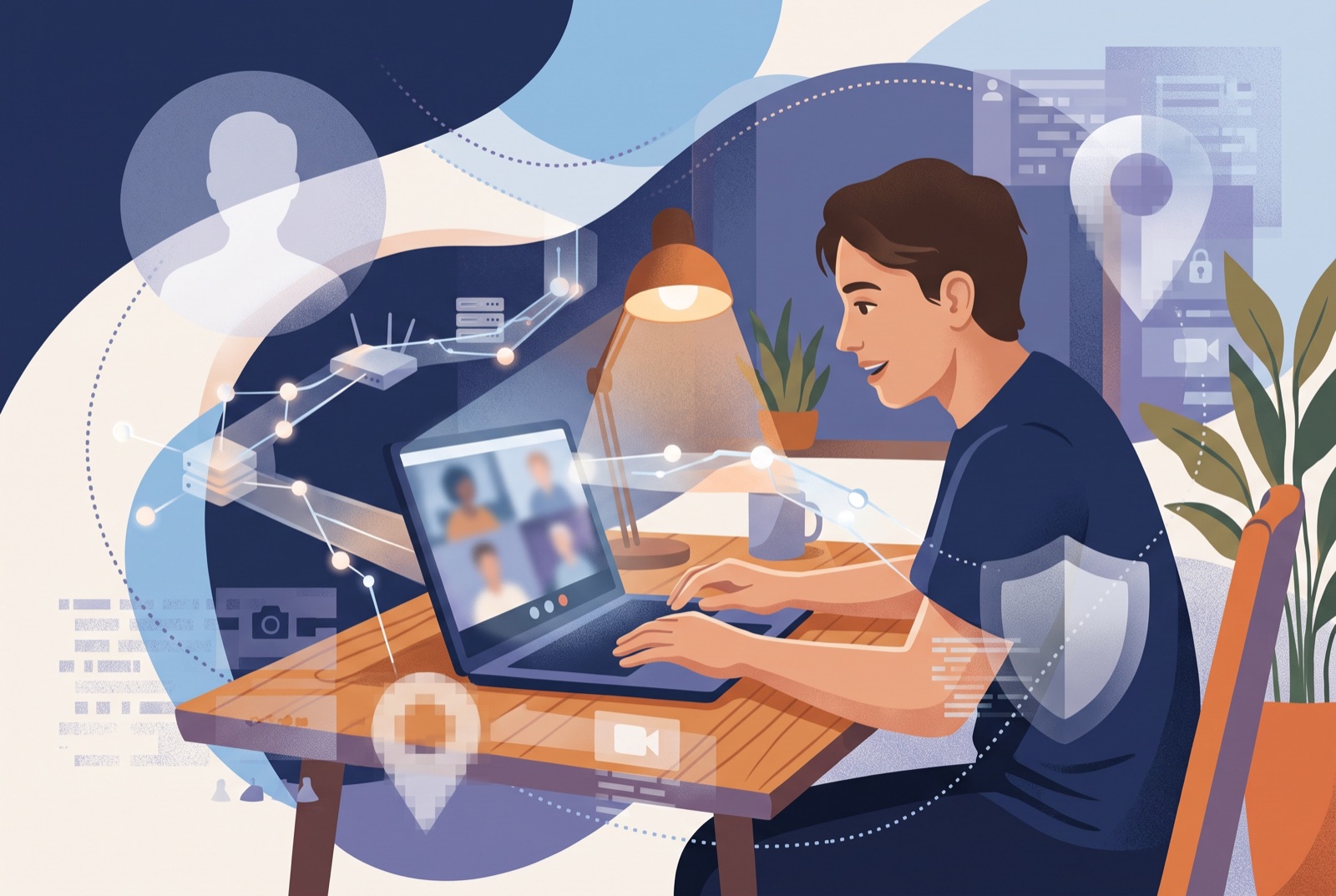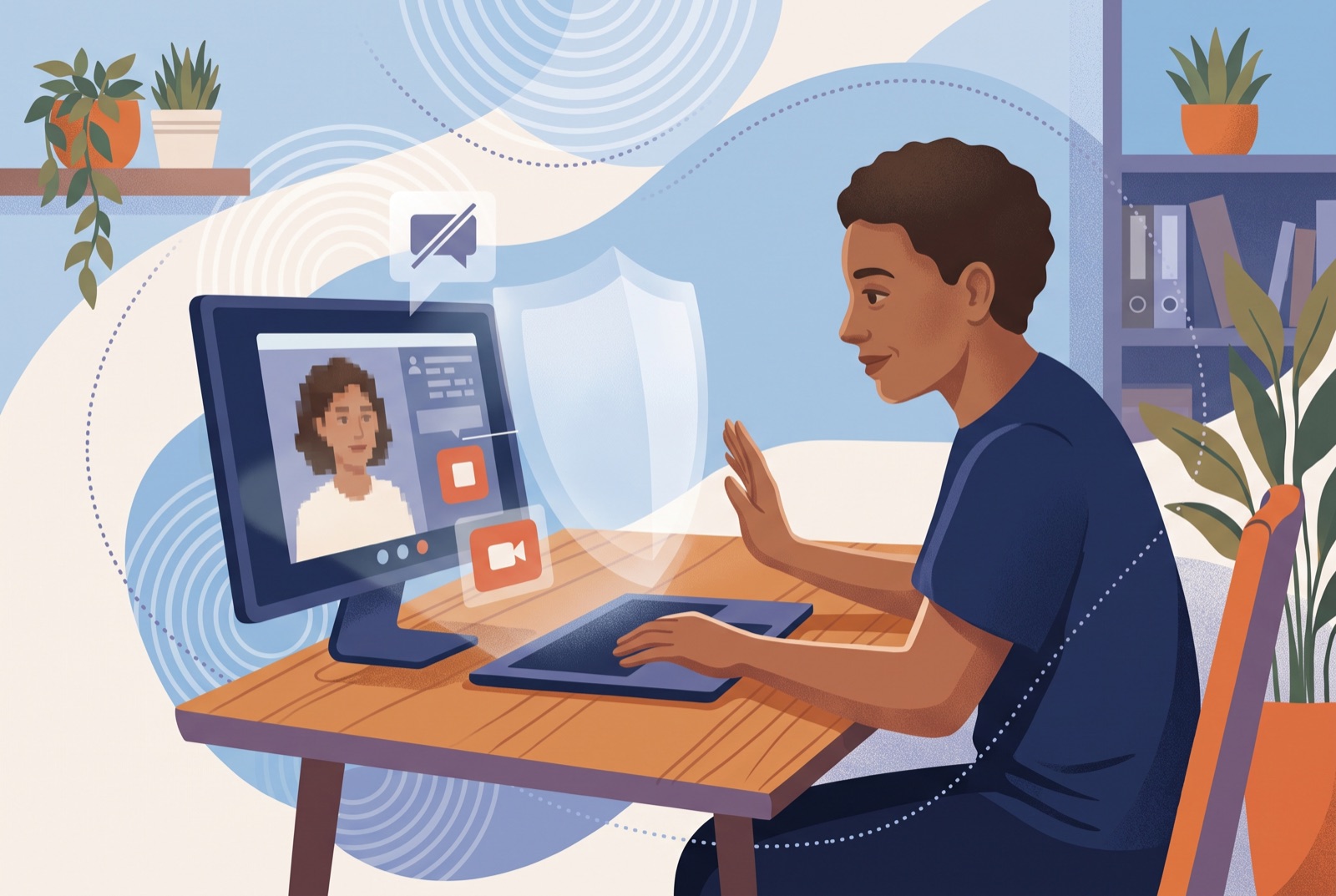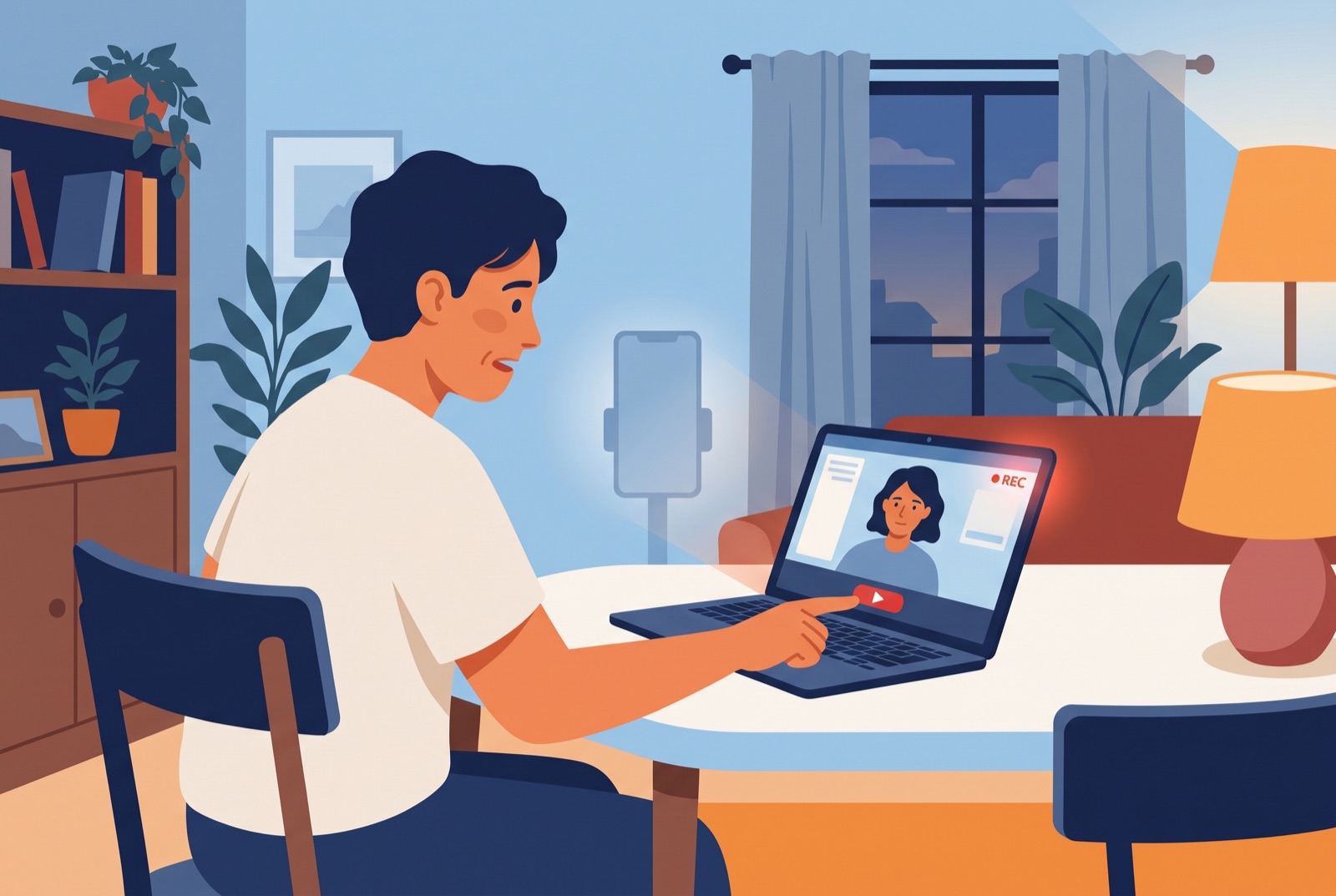
Any image or sound that reaches another person’s screen can potentially be saved. A platform can discourage misuse and provide reporting tools, but it cannot guarantee that a stranger has not used screen recording, a screenshot, or a second device.
Recording may happen without a visible signal
Modern phones and computers include built-in tools for capturing a screen. Separate recording software can do the same, and someone can point another camera at the display. The person being recorded may not see an icon or receive a notification.
This is not unique to random chat. The same limitation applies to most video calls, disappearing media, livestreams, and private messages: once content is shown on someone else’s device, technical control becomes limited.
Reduce what a recording could reveal
Treat the camera frame as publishable, even when you expect a conversation to stay private. That does not mean assuming every person is malicious. It means choosing a level of exposure that still feels acceptable if your assumption is wrong.
- Remove mail, badges, school or workplace items from view.
- Avoid showing windows, street signs, or recognizable landmarks.
- Keep legal names, contact details, and account handles out of the conversation.
- Wear and behave in a way you would be comfortable having captured.
Consent and recording laws vary
Rules about recording conversations differ across countries and, in some places, between states or regions. Some situations require consent from every participant; others may apply different standards. Platform rules and local law are not the same thing.
This article is general safety information, not legal advice. If a recording creates a serious legal, employment, harassment, or safety concern, preserve the relevant evidence and seek advice appropriate to your location.
Treat pressure as a warning sign
Be cautious if someone asks you to pose, repeat an action, move the camera around your room, reveal private information, or continue after you say no. A request framed as a joke can still cross a boundary.
You do not need proof that recording is happening before you leave. Stop the room as soon as the interaction no longer feels acceptable, and report behavior that violates the rules.