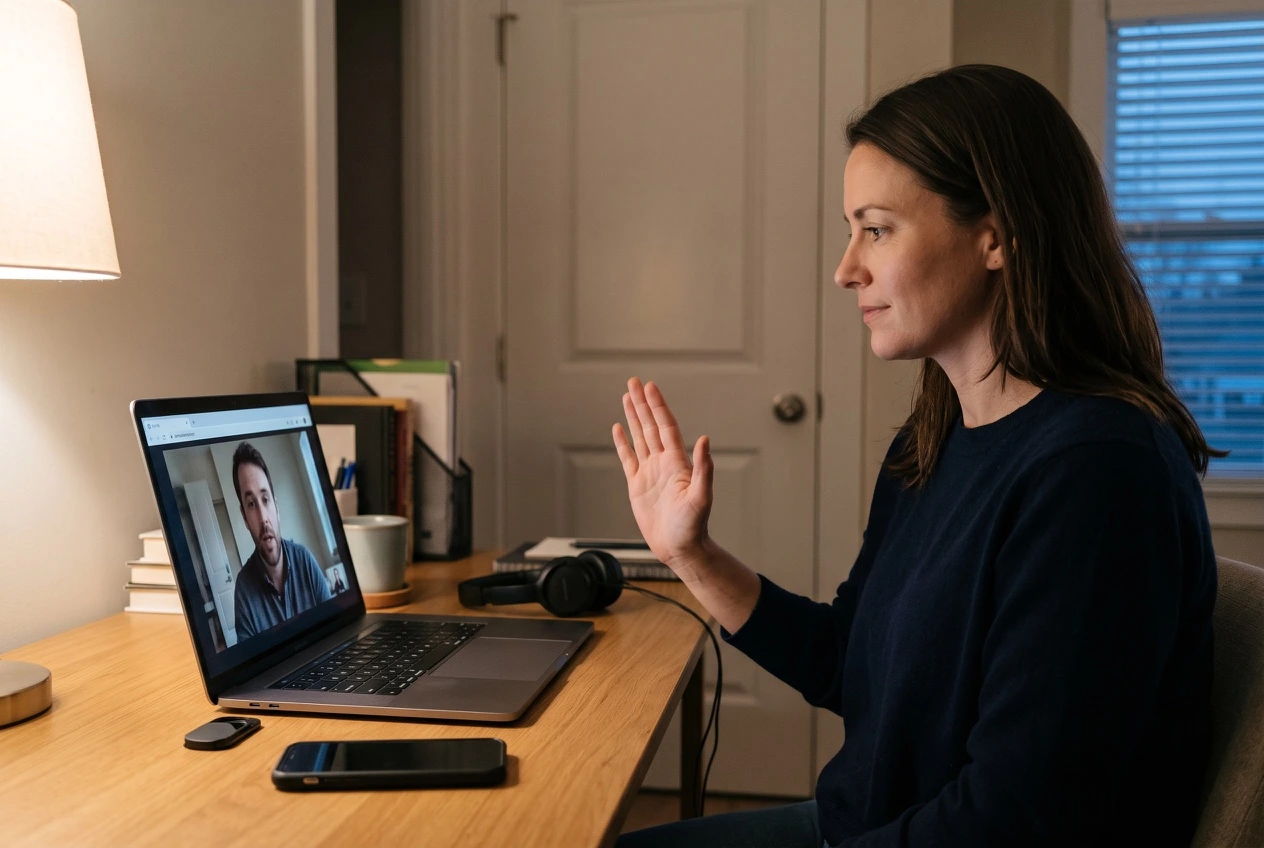
You press Report, the conversation ends, and the next screen appears. There may be no instant message explaining what happened to the other person. That can make reporting feel uncertain, but the button still has an important job: it connects a specific room and behavior to a safety signal the service can review.
Decide whether to report or simply leave
Not every awkward or boring conversation needs a report. If the chat is simply not a match, use Next or Stop. Report is for conduct that may violate the service rules, including harassment, threats, sexual behavior without consent, hate speech, scams, or attempts to involve a minor.
Your safety comes before documenting the perfect incident. Leave immediately if you feel threatened or pressured. A report is useful, but you do not need to remain in a harmful conversation to collect more evidence.
A report ties a safety concern to a specific conversation
A useful report is more than a general complaint. It identifies the room, the account involved, and the reason selected at the time of the incident. Those details help separate a concrete event from an unsupported description sent much later.
Omegle.Land includes a Report control in a connected room. Selecting a reason and submitting the report ends that match and allows you to move on. Reporting should never be treated as a way to continue arguing with the other person.
Do not expect an instant or visible punishment
A report does not necessarily mean an automatic ban. A service may need to compare the report with the information available for that session, look for repeated patterns, and decide what response is proportionate. The reporter may not receive details about another user's account.
That lack of a public result does not mean the report disappeared. Safety decisions can involve privacy, evidence limits, and patterns that only become clear across multiple incidents. Submit an accurate reason and avoid exaggeration; precise reports are easier to interpret.
Choose the reason that best describes the behavior
Use the closest available category rather than the one that sounds most severe. If several problems happened, choose the behavior that created the clearest safety concern. Do not file repeated reports because you dislike someone or because they ended the chat first.
- Report what happened in the current room, not assumptions about the person.
- Do not provoke someone to create a more dramatic incident.
- Keep any relevant messages you received outside the service without resharing them publicly.
- Block contact on another platform if the person followed you there.
Take practical steps after the report
Check whether your face, full name, workplace, school, social handle, or location appeared during the call. If the stranger learned how to contact you, tighten the privacy settings on those accounts and ignore new requests from unfamiliar profiles.
For a credible threat of violence, stalking, blackmail, or non-consensual intimate-image sharing, a platform report may not be enough. Preserve messages and account details, tell someone you trust, and contact the appropriate local authority or specialist support service. Do not pay a blackmailer or negotiate under a deadline they created.
Reporting helps, but it cannot remove every risk
Moderation tools work with limited evidence and cannot guarantee that every harmful act is detected or prevented. Keep your own boundaries active even on a service with reporting controls: reveal less, leave early when pressure begins, and treat any request to move quickly to a private account as optional.
The best use of Report is simple: leave the unsafe interaction, describe it accurately through the available reason, and then protect yourself outside the room. You are not responsible for investigating the stranger or proving the final outcome.